
A Glorious, Underground Harvest

A Glorious, Underground Harvest

“Please, just let me speak with SoonKi a little longer,” missionary YungSok pleaded when he called GongBan back.

“No, that won’t do. It’s too dangerous.” GongBan paused, then added, “Wait… what is this?” A photograph followed.

At first glance, it looked like nothing more than scribbles across a newspaper, tiny letters crammed into the margins. But as YungSok looked closer, faint pencil marks emerged from the clutter. Kim OO. Park OO. Lee OO. Name after name, written in dense, careful rows. A code? he wondered, turning the image over in his mind, but he couldn’t make sense of it.

“When SoonKi gave this to me, she said something strange,” GongBan continued. “She said, ‘There are more of your descendants than you thought.'”

The words hit YungSok like a blow. The photograph wasn’t a code at all. It was a list of believers. Eleven names in total.

Two years ago, when they had first made contact, SoonKi had said nothing about anyone keeping the faith. Yet here, in these eleven names, was proof: an underground church had taken root. And there was more. By sharing this news, that “there are many descendants of your Father, your Father’s descendants have increased,” SoonKi revealed something extraordinary.

With nothing more than a handful of Bible verses heard in China, she had planted those words in others, and a community of faith had begun to grow.

WAYS TO PRAY:
Even Sleep is Political

Even Sleep is Political

“Behold, they are all a delusion; their works are nothing; their metal images are empty wind. Behold my Servant, whom I uphold, My chosen, in whom My soul delights; I have put my Spirit upon Him; He will bring forth justice to the nations.” Isaiah 41:29–42:1

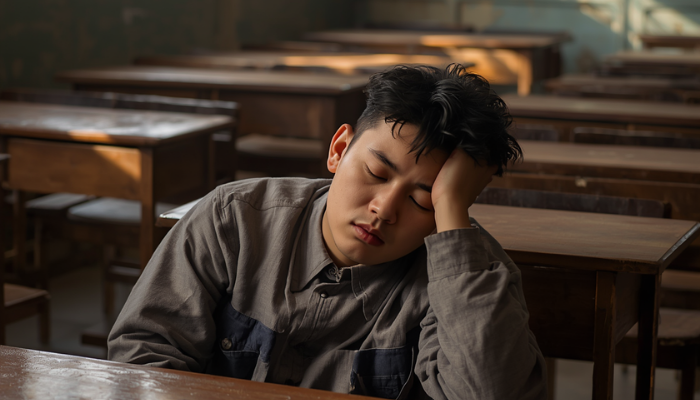
Every week, GaoHan’s stomach knotted with dread as “Film Literature Study” crept onto the school schedule. He’d heard the stories, whispered warnings about what happened to students caught nodding off: harsh punishment, the kind that left marks beyond bruises.

The weekly documentaries glorifying Kim Jong Un’s revolutionary genius were designed to forge unshakeable loyalty. But when you’re watching the same footage, the same praise, the same carefully choreographed triumphs week after week, staying awake becomes its own act of defiance against your own body.

And GaoHan’s body was already losing that battle. Chronic hunger gnawed at his concentration. The classroom air hung thick and acrid, the green wood smoldering in stoves that meant to heat the room were choking the students instead. Keeping his eyes open felt like pushing boulders uphill.

Then, one bitter winter session, the boulders won.

As The Juche Military Parade Demonstrating the Dignity and Majesty of Joseon flickered across the screen, GaoHan and a classmate slipped into sleep. It was an ordinary moment of human exhaustion and it would cost them everything. Both boys were immediately accused of harboring “serious political issues.” Since then, they have been marched onto the “ideological struggle” stage at a nearby youth re-education camp, forced to publicly answer for the crime of falling asleep.

In NK, praising the leader isn’t optional,  it is survival. The Kim family’s cult of worship demands total, visible, unwavering devotion from every citizen. But for the young, the scrutiny cuts deepest. There is no margin for a drooping eyelid, a wandering mind, or an honest moment of fatigue. For GaoHan, exhaustion and hunger, even sleep became a political act.

PRAY FOR: