A Glorious, Underground Harvest

A Glorious, Underground Harvest

“Please, just let me speak with SoonKi a little longer,” missionary YungSok pleaded when he called GongBan back.

“No, that won’t do. It’s too dangerous.” GongBan paused, then added, “Wait… what is this?” A photograph followed.

At first glance, it looked like nothing more than scribbles across a newspaper, tiny letters crammed into the margins. But as YungSok looked closer, faint pencil marks emerged from the clutter. Kim OO. Park OO. Lee OO. Name after name, written in dense, careful rows. A code? he wondered, turning the image over in his mind, but he couldn’t make sense of it.

“When SoonKi gave this to me, she said something strange,” GongBan continued. “She said, ‘There are more of your descendants than you thought.'”

The words hit YungSok like a blow. The photograph wasn’t a code at all. It was a list of believers. Eleven names in total.

Two years ago, when they had first made contact, SoonKi had said nothing about anyone keeping the faith. Yet here, in these eleven names, was proof: an underground church had taken root. And there was more. By sharing this news, that “there are many descendants of your Father, your Father’s descendants have increased,” SoonKi revealed something extraordinary.

With nothing more than a handful of Bible verses heard in China, she had planted those words in others, and a community of faith had begun to grow.

WAYS TO PRAY:

Even Sleep is Political

Even Sleep is Political

“Behold, they are all a delusion; their works are nothing; their metal images are empty wind. Behold my Servant, whom I uphold, My chosen, in whom My soul delights; I have put my Spirit upon Him; He will bring forth justice to the nations.” Isaiah 41:29–42:1

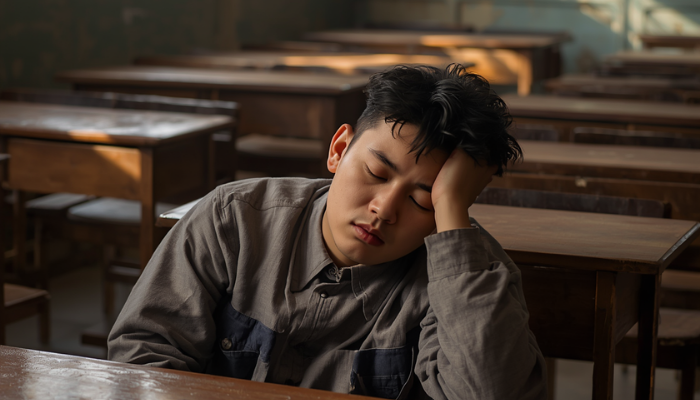
Every week, GaoHan’s stomach knotted with dread as “Film Literature Study” crept onto the school schedule. He’d heard the stories, whispered warnings about what happened to students caught nodding off: harsh punishment, the kind that left marks beyond bruises.

The weekly documentaries glorifying Kim Jong Un’s revolutionary genius were designed to forge unshakeable loyalty. But when you’re watching the same footage, the same praise, the same carefully choreographed triumphs week after week, staying awake becomes its own act of defiance against your own body.

And GaoHan’s body was already losing that battle. Chronic hunger gnawed at his concentration. The classroom air hung thick and acrid, the green wood smoldering in stoves that meant to heat the room were choking the students instead. Keeping his eyes open felt like pushing boulders uphill.

Then, one bitter winter session, the boulders won.

As The Juche Military Parade Demonstrating the Dignity and Majesty of Joseon flickered across the screen, GaoHan and a classmate slipped into sleep. It was an ordinary moment of human exhaustion and it would cost them everything. Both boys were immediately accused of harboring “serious political issues.” Since then, they have been marched onto the “ideological struggle” stage at a nearby youth re-education camp, forced to publicly answer for the crime of falling asleep.

In NK, praising the leader isn’t optional,  it is survival. The Kim family’s cult of worship demands total, visible, unwavering devotion from every citizen. But for the young, the scrutiny cuts deepest. There is no margin for a drooping eyelid, a wandering mind, or an honest moment of fatigue. For GaoHan, exhaustion and hunger, even sleep became a political act.

PRAY FOR:

A Light No Darkness Could Overcome

A Light No Darkness Could Overcome

In NK, survival is not a given—it’s a daily battle.

PakSil wakes each morning with the same question pressing on his chest: Will we make it through today? Hunger is constant, sharp, and unrelenting. For those labeled among the “outcast” class, life is reduced to a single, exhausting pursuit—finding just enough to stay alive.

For his wife, NoenHee, that pursuit comes with terrifying risk. Like many women, she walks dangerous smuggling routes, slipping past border guards and corrupt officials, all for the chance to bring home a single meal. The cost is steep. Some are beaten. Others vanish into labor camps. Some never return at all.

Even their hardest efforts rarely lead to relief. A day’s work often ends in deeper debt. Missing work isn’t an option—it can mean punishment or worse. In a place where “happiness” is defined as loyalty to the regime, people like PakSil and NoenHee are left with nothing but endurance.

And then, something unexpected happened.

After years of scraping by, worn down by fear and uncertainty, they encountered something they had never known before—love that asked nothing in return.

PakSil describes it this way: “We finally received true love and guidance for life. The tears and sincerity of those who shared about Jesus Christ melted our frozen hearts. For the first time, we felt real happiness… and discovered purpose.”

NoenHee remembers the fear she felt at first—the risk, the unknown—but something deeper took root. “Now, that truth is engraved in my heart. No storm can shake it. I believe the day will come when God’s love reaches our people—that they will discover true joy, dignity, and truth.”

In a place defined by scarcity and control, hope has begun to grow—quietly, courageously, and unshakably.

PRAY FOR:

When Hunger Met Heaven

When Hunger Met Heaven

HongSeun tells her story from the far side of the China–N. Korean border—a place where survival often overshadows hope. But what began as a simple exchange would become the turning point of her life.

“I met a woman in China who pressed one hundred yuan into my hand,” HongSeun recalls. “Then she asked me to do something unusual—write down the Lord’s Prayer and the Apostles’ Creed. She told me, ‘When you return to North Korea, pray these words again and again. God answers prayer.’”

At the time, HongSeun didn’t fully understand. But she remembered.

Back in N. Korea, the money eventually ran out—and so did her food. One night, desperate and alone, she shut every door, covered the windows with blankets, and whispered the words she had written down. Slowly, carefully, she prayed the Lord’s Prayer—one word at a time.

When she finished, she added her own trembling plea: “God, I am hungry. Please take care of my rice. I pray in the name of Jesus. Amen.”

It was the first time she had ever truly prayed.

She fell asleep that night with an empty stomach.

The next morning, she opened her door—and froze. There, just outside, lay two kilograms of noodles.

“It felt like an earthquake in my head,” she says. “Who could have brought this to me?”

No answer came—but neither did doubt. Days later, hunger returned. This time, she prayed again—same words, same desperation. The following morning, a woman from the market called out to her. She handed HongSeun a sack of rice, explaining that her bag had torn the night before and the rice had spilled and become dirty.

“I don’t have time to clean it,” the woman said. “Just take it and eat.”

HongSeun held the sack in her hands, stunned. There must be something to this…

And so she kept praying.

What followed was nothing short of miraculous. For a year and a half, provision came—again and again—in ways she couldn’t explain. Each answer deepened her curiosity… and her trust.

Later, when she encountered the words of Romans 10, something clicked into place.

“I realized that God answered me because I confessed with my mouth,” she says. “Even before I fully understood or believed—He heard me. He responded.”

She pauses, reflecting on the journey from desperation to discovery.

“Even now, when I look back,” HongSeun says softly, “I am amazed at all the prayers He answered.”

In a place marked by scarcity and silence, God had made Himself known—one prayer at a time.

PRAY FOR:

Whispers of Faith in a Watched Nation

Whispers of Faith in a Watched Nation

Last year, God worked powerfully through SuelKon. Despite immense risk, three new churches were quietly established in two regions of NK. At the same time, she continued to encourage five underground churches in other areas, offering both spiritual upliftment and practical help. Much of that support depended on donated supplies that were smuggled across the border or discreetly delivered to the small room she rented.

But toward the end of the year, the situation grew even more difficult. North Korea tightened its borders once again, cutting off nearly every pathway for goods to enter. Supplies sent by SuelKon’s organization can no longer get through. With smuggling routes shut down and customs inspections intensified, many already struggling families now go cold and hungry. Surveillance has also increased across the country. Borders are heavily guarded, roads are closely monitored, and anyone traveling or carrying goods without official documentation risks immediate arrest.

These restrictions have made it far harder for SuelKon to move about and visit the underground churches she supports. Yet one thing has not been restricted—her prayers to the God of heaven’s armies.

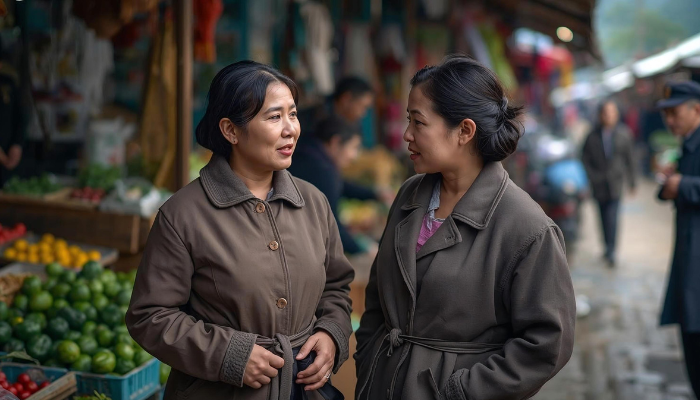
Even under constant watch, God continues to open small windows of opportunity. In crowded marketplaces and other everyday places, SuelKon occasionally meets fellow believers for brief moments. Though their conversations must be quick and careful, she faithfully encourages them day by day, sharing words of hope from Scripture and reminding them that God has not forgotten them.

PRAY FOR:

Sent for Such a Time as This

Sent for Such a Time as This

For three long years, Heoksun wept in anguish. Overwhelmed by pain and confusion, she poured out her heart to God, crying, “God, why did You bring me here to live like this? Please—say something!” Her grief was so deep she could barely put words to the resentment she felt toward Him.

Deceived by NK propaganda that promised a better life, Heoksun crossed the border into China—only to discover a harsh and heartbreaking reality. The dream she had believed in collapsed, leaving her disillusioned and angry with God. Yet in that darkness, a greater purpose was quietly unfolding.

Heoksun had known Jesus since childhood while living in China. When she realized she had been misled, she struggled to understand why God had allowed it. For three years, she prayed through her pain. Slowly, God reshaped her sorrow into calling. She came to see that He had sent her—not by accident, but by design—to share her story and testify about Him.

“At that time, all you needed was a river-crossing permit to travel to China,” Heoksun recalled. “Once there, I asked my relatives for whatever they could give me. I packed it all up, returned to NK, and gave it as gifts to my neighbors.”

Her face, etched with years of hardship, softened with a quiet smile. What she received was never for herself. She used every gift as a bridge for the gospel—turning simple provisions into eternal investments.

As Scripture reminds us:
“I tell you, make friends for yourselves by how you use worldly wealth, so that when it runs out you will be welcomed into the eternal homes.”Luke 16:9